


Recently, one of our daughters had the flu. She was worn down beyond normal tiredness and seemed very frustrated to be still awake.
Her nose was clogged, she felt terrible, and kept screaming that she wanted to sleep, which made it worse because she was right.
Her body wanted rest. She needed to sleep. But every time she got close, something made her uncomfortable again, and she’s too small to understand why she feels this bad, or that it will pass.
I gave her medicine and tried to help her settle. I did the small practical things when there wasn’t much else to do, and for a while, none of it worked. She kept crying, kept wanting to sleep, kept not getting there.
Until she fell asleep, and the room went quiet.
But I didn’t quite relax yet. Part of me was still listening, waiting for the next cry, or the next movement, for the moment to start all over again.
I started thinking about that. How often does the situation on the outside change before the inside catches up?
Years ago, when we were still building the company, I was waiting for an answer to an offer we’d sent. It wasn’t the dramatic kind where the company would collapse without it, but it was still a big deal. Getting it would be a real breakthrough for us.
The client had said we’d hear back on Friday. So Friday came, and we waited.
There’s a stage of waiting where you can still pretend you’re not waiting. Where you work on something else. Then you check your email a little more than usual, but tell yourself there’s no reason to think about it yet.
Then the afternoon starts moving. Three o’clock. Nothing.
Four o’clock. Still nothing.
By five, I wasn’t waiting for a reply anymore. I was bracing for a future where the reply didn’t come.
It’s a strange place to be. Nothing has happened yet, but internally, something already has. Your mind starts preparing for all sorts of futures. Maybe they had changed their mind? Maybe they gave it to someone else? What if the silence means something?
Rationally, you know people are busy, and sending emails can get delayed for all sorts of reasons. But knowing that doesn’t change how the waiting feels.
So eventually, I called my contact. Politely and carefully. Likely with that tone, when I try to sound casual, while absolutely not feeling casual. I apologized and asked him if there was any update.
He said yes. They’d approved it earlier that day, but had been busy and hadn’t sent the official response yet.
There had been an answer for hours already, but it just hadn’t reached us yet.
So at 5:25 pm, the email came through, and we had the sale. I opened a beer with my cofounders, and it was a good moment.
But even then, part of me was still catching up. Minutes earlier, I had been bracing for a different reality, and now I was supposed to be relieved, celebrating, and happy.
Good news doesn’t always remove the posture you were in before it arrived.
The waiting for an answer ended, but the body is still braced.
A difficult conversation ends well, someone even apologizes, but I still feel the urge to keep defending, to keep explaining.
From the outside, this can look like refusing to move on. The child is asleep, so relax. The email came, so celebrate. The conversation is over, so let it go.
I’ve said versions of that to myself plenty of times.
But I think the more honest answer is that some parts of us are slower to trust the ending. Not because we want to stay tense, or because we’re trying to make life heavier than it is. The part of us that is prepared for difficulty doesn’t immediately know, or believe, that its work is done.
It waited for the cry, the rejection, the criticism, the next thing to go wrong. The thing didn’t happen. But the part is still standing there with its coat on, not yet convinced it can sit down.
This might also be why some achievements feel strange, since by the time they arrive, we’ve spent so long bracing for whether they would.
The result and the relief don’t arrive together. The result comes in an email. Relief takes longer, because the body has to be convinced, and the body can be slow.
But sometimes it never gets convinced. Sometimes the relief doesn’t arrive. Which makes me wonder if I was waiting for the result itself, or for what I hoped the result would prove.
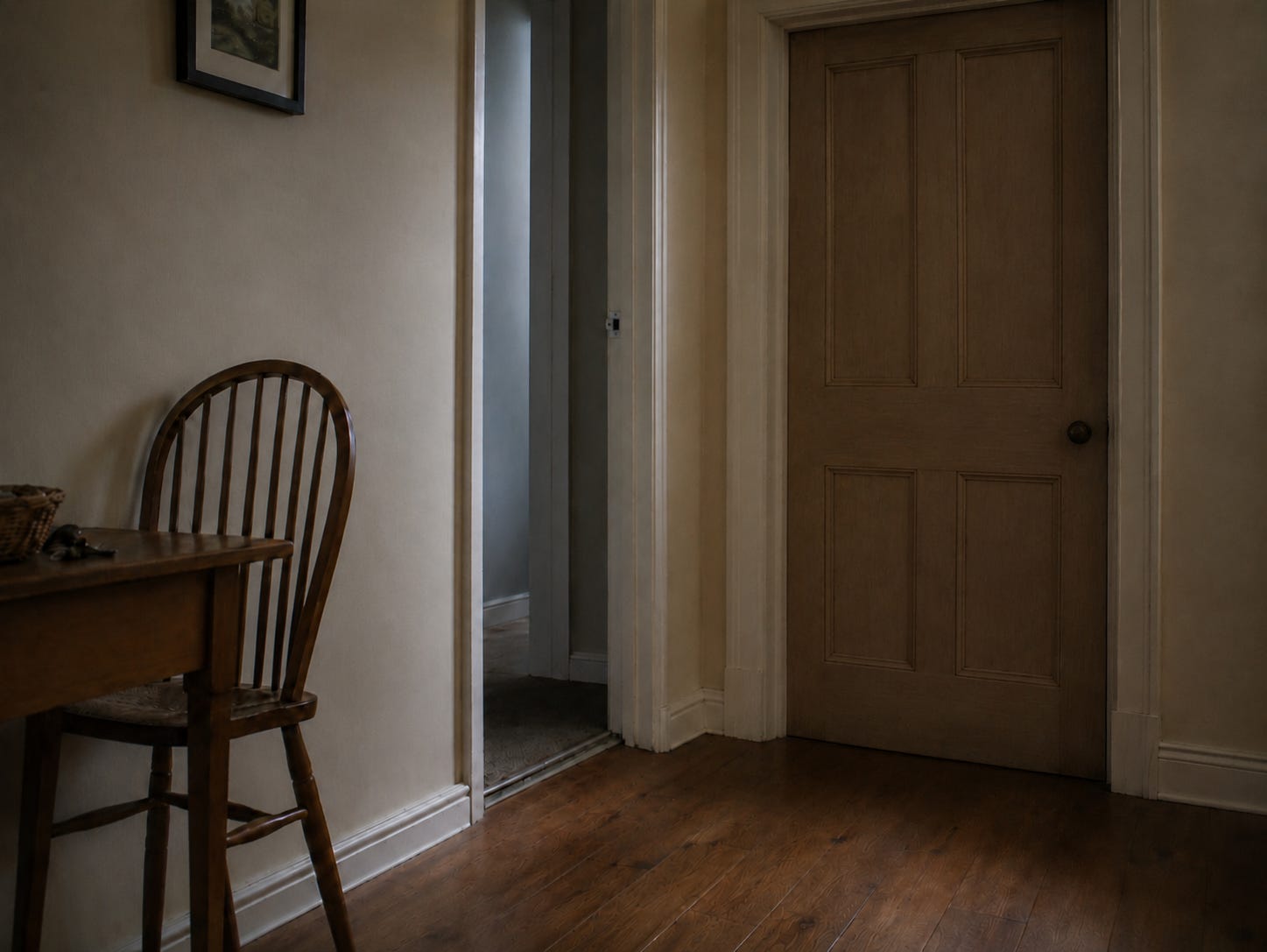
The child is asleep. The offer is approved. The difficult thing is done. And some part of me is still waiting by the door.
I used to think that part just needed time to catch up. That it would sit down once it believed the danger had passed.
But lately I’m not sure that’s what it’s waiting for. The danger passed a long time ago, and it’s still standing there.
If this felt familiar, you can explore more of my writing here.
Every struggle phase makes us more strong, makes us more prepared for next challenge and also a fast actionable person.
Just highlighting this part
But every time she got close, something made her uncomfortable again, and she’s too small to understand why she feels this bad, or that it will pass.
Part of me was still listening, waiting for the next cry, or the next movement, for the moment to start all over again.
It waited for the cry, the rejection, the criticism, the next thing to go wrong. The thing didn’t happen. But the part is still standing there with its coat on, not yet convinced it can sit down.
The child is asleep. The offer is approved. The difficult thing is done. And some part of me is still waiting by the door.
Keep writing 💫
Stress produces hormones.
The adrenalin and cortisol take time, and continued calm, to exit the body.
Even very good reasoning does not speed the process. Your thoughts sound normal, emotionally healthy.
"How the Body Keeps the Score" by Bessel van der Kolk MD has been on the best seller list for years. The cases he cites are more dramatic than your situation but the physiological process is the same.